

Services

Steel Fabrication Boise

Steel Fabrication Boise involves the custom building of welded and formed steel components used where rigidity, structural support, and exact fit are required. This service typically includes items such as base plates, columns, support frames, stair stringers, equipment stands, welded brackets, and reinforced assemblies that must perform under load. Mild steel is commonly used because it can be cut, drilled, formed, and welded into a wide range of configurations, making it suitable for both structural and functional applications. Each component is fabricated around the dimensions, connection details, and working conditions of the project rather than adapted from stock parts.

Steel Components Fabricated in Boise for Structural Support and Field Fit

Steel fabrication in Boise is often driven by jobs where the component has to do more than simply fill space. It may need to carry weight, resist movement, tie into concrete or wood framing, support machinery, or maintain alignment within a larger assembly. For that reason, steel fabrication commonly includes posts, welded frames, anchor plates, support brackets, channels, mounting assemblies, and custom reinforcements built from plate, tube, or structural shapes. The primary output is not just a metal part, but a steel component designed around how it will be attached, loaded, and used once installed.

Some Boise ID fabrication projects also overlap with related fabrication work depending on the build. Broader assemblies may involve metal fabrication Boise where the project includes mixed components beyond structural steel alone. Stair and elevated-access jobs may require handrail fabrication Boise ID to complete the safety side of the system after the steel support work is finished. In applications where reducing weight or improving corrosion resistance matters for certain sections, aluminum fabrication Boise Idaho may be incorporated alongside steel. This allows the project to use steel where strength is critical and other materials where different performance qualities are needed.

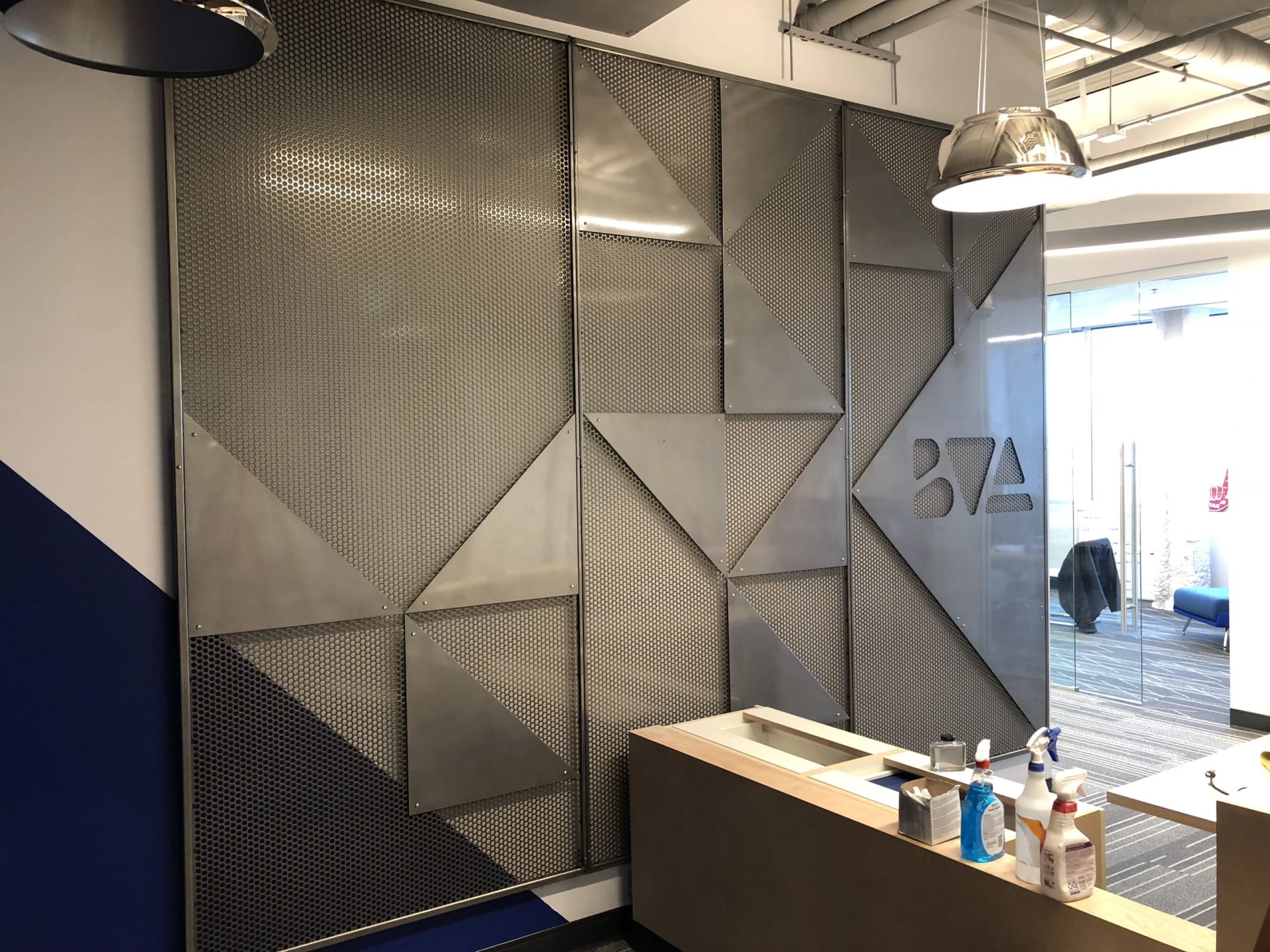
Erwin Steel wall project

Where Steel Fabrication Is Needed in Boise Projects

Steel fabrication is commonly used in Boise when a project includes weight-bearing elements, rigid supports, or custom assemblies that need to hold position over time. In commercial renovation areas near Downtown Boise and along Main Street, steel fabrication is often used for tenant improvements, framed openings, support structures, and custom-built connections that must fit within existing buildings. These jobs frequently require fabrication that responds to real site conditions rather than idealized dimensions taken from standard plans.

In industrial and utility-oriented areas closer to the airport, west-side business parks, and service corridors off Gowen Road, steel fabrication is often tied to equipment support, work platforms, structural modifications, and welded frames that need to withstand repeated use. Residential projects can also require steel, particularly in hillside areas and custom-home settings where stair framing, deck support, or other structural tie-ins need more rigidity than lighter materials can provide. In each case, the value of steel comes from its ability to hold shape under load, accept welded connections, and be fabricated into assemblies that match the actual requirements of the site.

Why Custom Steel Fabrication Is Used When Standard Pieces Fall Short

Steel projects often fail when people assume stock parts can solve field conditions that are not actually standard. A bracket may need a specific hole pattern, a frame may need to clear an obstruction, or a support may need to land on an exact mounting surface that does not line up with pre-made components. Standard pieces can work in simple situations, but many structural and equipment-related applications require dimensions, weld locations, and attachment details that are too specific to leave to guesswork.

Custom steel fabrication allows the steel to be built around those constraints before it reaches the site. Plate thickness, member size, weld sequence, and connection design can all be adjusted to suit the intended use. That is especially important in support work, where even minor dimensional errors can affect alignment, installation time, or load transfer. Fabrication solves those problems by making the steel match the project, not the other way around.

Material, Load, and Connection Considerations for Steel Work in Boise

One of the main considerations in steel fabrication is choosing the right section type and thickness for the job. Flat plate, square tube, channel, and structural members all behave differently depending on span, load direction, and connection method. A welded equipment stand has different requirements than a stair stringer or a post base, even if all three are made from steel. In many Boise projects, finish selection matters as well, especially when steel will be installed outdoors or in semi-exposed areas where moisture, irrigation overspray, or seasonal weather can affect the surface over time.

Boise projects also present a mix of field conditions that influence fabrication decisions. Older commercial spaces may have uneven slabs, altered framing, or previously modified connection points that require custom-built steel rather than stock shapes cut in the field. New construction can create a different challenge by demanding tighter tolerances and cleaner coordination with other trades. For that reason, steel fabrication often depends as much on layout, hole placement, and weld access as it does on raw strength. A steel component performs well only when its geometry, mounting method, and finish all match the conditions it will actually face after installation.

Questions to Ask Before Starting a Steel Fabrication Project in Boise

What kinds of jobs usually require steel fabrication?

Steel fabrication is commonly used for supports, frames, brackets, columns, stair components, and other welded assemblies that need rigidity and load-bearing performance. It is especially useful when a component must fit precise mounting points or support repeated use. The exact scope depends on how the piece will function in the project.

Why choose steel instead of another metal?

Steel is often chosen when strength, stiffness, and weldability are the main priorities. It performs well in structural and support applications where lighter materials may not provide the same level of rigidity. The tradeoff is that finish and corrosion protection need more attention in exposed environments.

Can custom steel be fabricated for retrofit work?

Yes. Many steel projects are fabricated specifically for existing buildings, equipment, or modified spaces where stock components do not fit correctly. Field measurements or accurate drawings are used to build around real conditions rather than assumed dimensions.

What affects how a steel component should be finished?

Finish selection depends on where the component will be installed and what it will be exposed to. Outdoor use, moisture, abrasion, and appearance expectations all influence whether the steel should be painted, coated, or otherwise protected. The finish is part of performance, not just appearance.

Plan Your Steel Fabrication Project in Boise

Steel Fabrication Boise is most useful when a project needs more than a stock bracket or pre-made part. Whether the work involves support frames, welded connections, equipment structures, or custom structural pieces, fabrication allows each component to be built around the way it will actually be mounted and used. That leads to better fit, cleaner installation, and more reliable performance once the steel is in place.

Call Erwin Custom Fabrication at (208) 856-6487 to request a custom quote for steel fabrication in Boise.