
Metal fabrication is the process of cutting, shaping, welding, and assembling metal into finished products or custom components. It is used in everything from custom gates and railings to commercial kitchen equipment, decorative signs, steel tanks, and structural metalwork.
For homeowners, businesses, contractors, and property managers, metal fabrication often becomes necessary when off-the-shelf products do not fit the exact size, style, durability, or function needed for a project. Whether you need a custom range hood for a kitchen remodel, a decorative gate for a property, or fabricated steel components for a commercial facility, custom fabrication gives you a solution built specifically for your project.
At Erwin Custom Fabrication, custom metalwork has been the focus since 1993. The company serves customers across the Treasure Valley, including Boise, Meridian, Eagle, Kuna, Caldwell, McCall, Valley County, and Sun Valley. Erwin specializes in one-of-a-kind fabrication projects using stainless steel, aluminum, galvanized steel, copper, zinc, and other metals for residential, commercial, industrial, and agricultural applications.
What Is Metal Fabrication?
Metal fabrication is the process of taking raw metal materials and transforming them into finished products through a combination of cutting, bending, welding, machining, and assembly.
Unlike mass-produced metal products, custom metal fabrication is built around the exact needs of the customer. The dimensions, materials, finish, style, and function are all tailored to the specific project.
Common examples of fabricated metal products include:
- Gates and fences
- Stairs and railings
- Stainless steel countertops
- Metal cabinets
- Custom metal sinks
- Range hoods
- Fabricated steel tanks
- Ornamental metalwork
- Metal signs
- Commercial kitchen components
- Stainless steel wainscoting
- Structural supports and brackets
Custom fabrication is especially important because many residential and commercial properties have unique layouts, design requirements, and space limitations that make standard products difficult to use.
How Does the Metal Fabrication Process Work?
The fabrication process can vary depending on the project, but most custom metal fabrication jobs follow a similar path.
1. Project Consultation and Design
The process starts with understanding the customer’s needs. This may include measurements, sketches, photos, or architectural drawings.
For example, a homeowner may want a custom gate that matches the style of their home, while a commercial property owner may need a stainless steel countertop built to fit a specific workspace.
During this phase, the fabricator helps determine:
- Material type
- Dimensions
- Functionality
- Finish options
- Budget
- Installation requirements
- Timeline
2. Material Selection
Different metals are used for different purposes.
Common materials used in custom fabrication include:
- Stainless steel for corrosion resistance and clean appearance
- Aluminum for lightweight projects
- Galvanized steel for durability and outdoor use
- Copper for decorative accents
- Zinc for specialized architectural details
Material selection plays a major role in the performance of the finished product. Outdoor projects often require corrosion-resistant materials like stainless steel, powder-coated steel, or aluminum to hold up against moisture, weather, and long-term exposure.
3. Cutting and Shaping
Once the design and materials are finalized, the fabrication shop begins cutting and shaping the metal.
This may involve:
- Laser cutting
- Plasma cutting
- Saw cutting
- Press braking
- Rolling
- Punching
- Grinding
The goal is to create accurate pieces that fit together correctly during assembly.
4. Welding and Assembly
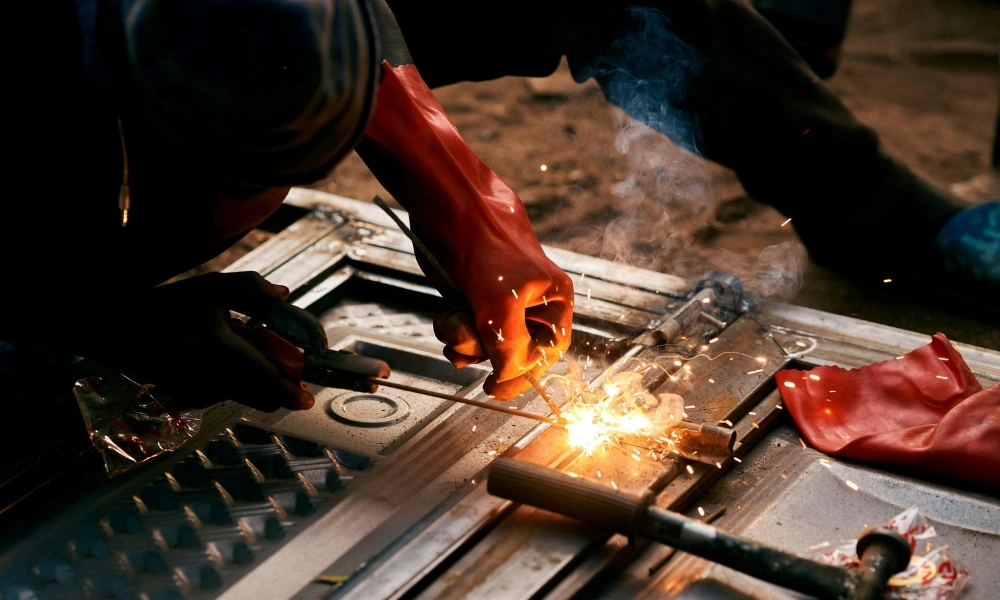
Welding is one of the most important parts of the fabrication process. It joins the metal components together to create the final product.
Strong, clean welds are especially important for projects like:
- Railings
- Stairs
- Gates
- Steel tanks
- Structural supports
- Commercial equipment
Precision welding helps ensure the finished product is safe, durable, and visually appealing.
5. Finishing and Installation
After fabrication is complete, the metal may be polished, painted, powder coated, brushed, or treated to improve appearance and durability.
Protective finishes are especially important for outdoor projects because they help prevent rust, fading, and weather damage.
Once finished, the product can be installed on-site or delivered for contractor installation.
Where Is Metal Fabrication Commonly Used?
Custom metal fabrication is used in both residential and commercial settings.
Residential Metal Fabrication
Homeowners often use custom metalwork for:
- Decorative gates and fences
- Stair railings
- Balcony railings
- Outdoor kitchen components
- Fireplace surrounds
- Custom range hoods
- Metal shelving
- Kitchen countertops
- Sink fabrication
- Privacy screens
- Decorative wall panels
Many homeowners choose custom fabrication because they want something unique that fits the style of the property better than a pre-made product.
Commercial Metal Fabrication
Commercial fabrication is common in restaurants, retail spaces, offices, warehouses, and industrial facilities.
Commercial projects may include:
- Stainless steel countertops
- Food prep stations
- Commercial sinks
- Equipment stands
- Metal partitions
- Security gates
- Handrails
- Fabricated tanks
- Metal signs
- Warehouse shelving
- Structural metal supports
Businesses often require custom fabrication because standard products do not always fit the space or workflow of the building.
What Factors Affect Metal Fabrication Costs?
Metal fabrication costs can vary significantly depending on the project.
Several factors influence pricing:
- Material Type: Stainless steel generally costs more than mild steel or aluminum.
- Project Size: Larger projects require more labor and materials.
- Complexity: Decorative details, curves, and custom finishes increase labor.
- Welding Requirements: More welding means more fabrication time.
- Finish Type: Powder coating, polishing, or painting add cost.
- Installation: On-site installation may increase the total price.
- Timeline: Rush jobs can cost more.
For example, a simple metal sign may cost a few hundred dollars, while a large custom gate, railing system, or commercial kitchen fabrication project could cost several thousand dollars.
The best way to get accurate pricing is to request a custom quote based on the exact measurements, materials, and design requirements of the project.
What Should You Look for in a Metal Fabrication Company?
If you are hiring a fabrication company, there are several things to look for before making a decision.
Choose a fabricator that offers:
- Experience with custom projects
- Strong welding and craftsmanship skills
- A wide range of materials
- Fast turnaround times
- Clear communication
- Design assistance
- Residential and commercial capabilities
- Examples of previous work
- Accurate quotes and timelines
A company with decades of experience can often identify problems early, recommend better materials, and create a finished product that lasts longer.
Erwin Custom Fabrication has been building custom metalwork since 1993 and handles projects ranging from small residential features to large commercial and industrial fabrication jobs across Boise, Meridian, Eagle, Kuna, Caldwell, McCall, Valley County, Sun Valley, and the rest of the Treasure Valley.
Frequently Asked Questions About Metal Fabrication
What is the difference between welding and metal fabrication?
Welding is one part of metal fabrication. Fabrication includes the entire process of designing, cutting, shaping, welding, finishing, and assembling metal into a finished product.
What type of metal is best for outdoor projects?
Stainless steel, galvanized steel, and aluminum are common choices for outdoor projects because they resist rust, moisture, and weather damage better than untreated steel.
Can custom metal fabrication be used for residential projects?
Yes. Many homeowners use custom metal fabrication for gates, railings, range hoods, fences, countertops, shelving, and decorative metal accents.
How long does a custom metal fabrication project take?
Small projects may take a few days, while larger or more complex projects can take several weeks. Project timelines depend on design complexity, material availability, and installation requirements.
Is custom metal fabrication more expensive than pre-made products?
Custom fabrication is usually more expensive upfront because it is built specifically for the project. However, it often provides a better fit, stronger materials, higher quality, and longer lifespan than standard pre-made products.
Trusted Custom Metal Fabrication Since 1993
Metal fabrication is essential for projects that require durability, customization, and a precise fit. Whether you need a custom gate, commercial sink, steel tank, railing system, or decorative metalwork, custom fabrication gives you a product built specifically for your needs.
Erwin Custom Fabrication has been providing custom metalwork since 1993, serving residential, commercial, industrial, and agricultural customers throughout Boise, Meridian, Eagle, Kuna, Caldwell, McCall, Valley County, Sun Valley, and the greater Treasure Valley.
If you are planning a custom metal project, call Erwin Custom Fabrication at (208) 856-648 to discuss your ideas, request a quote, and get expert guidance on the right materials and design for your project.